


Working closely with stakeholders to understand project requirements and provide architectural solutions.
Stakeholder Collaboration is the structured practice of engaging people who have interest in or influence over a project so that requirements are correctly captured, priorities are aligned, risks are surfaced early, and architectural solutions deliver measurable business value.

Objectives and success criteria
– Ensure the architecture satisfies business goals, user needs, and regulatory constraints.
– Achieve timely buy‑in and funding for proposals and changes.
– Reduce rework, surprises, and late scope shifts by continuously validating assumptions.
– Provide transparent traceability from stakeholder need to architectural decision and implementation.
Stakeholder types and concerns
– Business executives and sponsors: return on investment, strategic alignment, risk exposure, time to value.
– Product managers and owners: feature scope, user outcomes, roadmap sequencing, and business metrics.
– Engineering leads and developers: feasibility, maintainability, API contracts, developer experience, and delivery cadence.
– Operations / SRE / DevOps: operability, deployment patterns, SLAs, observability, and runbooks.
– Security and compliance: data protection, audit evidence, regulatory mapping, and control requirements.
– Data owners and analysts: data lineage, model compatibility, quality, and access patterns.
– Vendors and partners: integration contracts, SLAs, upgrade strategies, and commercial terms.
– End users and customer support: usability, performance, error handling, and supportability.
Engagement model and cadence
– Identify and map stakeholders: create a power/interest matrix and record owners, decision rights, and contact paths.
– Tailor communication styles: executive briefs for sponsors, technical diagrams and ADRs for engineers, compliance checklists for legal/security.
– Regular cadences: kickoff and discovery workshops, weekly or biweekly syncs for active projects, milestone reviews, and monthly steering updates.
– Ad hoc collaboration: office hours, design clinics, and war‑rooms during cutovers or incidents.
– Formal checkpoints: architecture review board submissions, security sign‑offs, and go/no‑go release approvals.
Discovery and requirements capture
– Run facilitated discovery workshops to capture business outcomes, constraints, success criteria, and non‑functional requirements.
– Use personas, user journeys, and business scenarios to translate stakeholder goals into measurable requirements.
– Produce a prioritized requirements backlog with explicit acceptance criteria and traceability to stakeholders.
Translating requirements into architecture
– Define clear acceptance metrics and SLIs for non‑functional requirements and map them to design choices.
– Propose candidate architectures with trade‑off analysis, cost/benefit, risks, and mitigation plans.
– Produce concise artefacts for each audience: one‑page executive summaries, HLA diagrams, sequence/component diagrams, and ADRs capturing decisions and alternatives.
Decisioning and conflict resolution
– Use structured decision forums with defined roles: proposer, reviewer, approver, and implementer.
– Capture decisions in ADRs with rationale, alternatives, and rollback or remediation actions.
– Apply the power/interest matrix to prioritize whose concerns require strict compliance versus those suited for negotiated compromise.
– Escalate unresolved or high‑risk trade‑offs to the architecture review board or sponsor committee with a clear recommendation and impact assessment.
Integration, validation, and acceptance
– Define testable acceptance criteria and integrate them into CI/CD pipelines, environment provisioning, and staging validation.
– Run joint validation sessions with stakeholders using prototypes, PoCs, or canary rollouts to confirm operational and business expectations.
– Maintain traceability from requirement → architecture → test results → sign‑off for auditability and confidence.
Communication, transparency and documentation
– Keep a single source of truth: architecture catalog, API registry, ADR repository, and a living requirements backlog in VCS or a governed wiki.
– Provide role‑appropriate views: executive dashboards, technical runbooks, API docs, and compliance evidence packs.
– Log meeting outcomes, action items, owners, and due dates; track convergence on open issues with visible metrics.
Metrics and indicators of healthy collaboration
– Time from requirement elicitation to architecture sign‑off.
– Percentage of requirements with automated acceptance tests or SLIs.
– Number of scope changes after architecture approval.
– Stakeholder satisfaction or confidence scores from periodic surveys.
– Rate of production incidents attributable to misunderstood requirements or integration gaps.
Common pitfalls and mitigations
– Pitfall: Too little early engagement — mitigate with structured discovery workshops and stakeholder mapping.
– Pitfall: Overly technical communication with non‑technical sponsors — mitigate with tailored executive summaries and business impact metrics.
– Pitfall: Decisions lost or undocumented — mitigate with mandatory ADRs and versioned documentation in VCS.
– Pitfall: Review overload and slow approvals — mitigate with SLAs for reviews, lightweight gating for low‑risk changes, and clear escalation paths.
– Pitfall: Conflicting priorities across stakeholders — mitigate with explicit trade‑off matrices, risk quantification, and sponsor arbitration.
Practical checklist for each integration project
– Create a stakeholder register and power/interest map.
– Run a discovery workshop capturing business outcomes, constraints, and non‑functional requirements.
– Produce HLA, sequence diagram, and one‑page executive summary within the first sprint.
– Publish ADRs for all major trade‑offs and record owners and review deadlines.
– Define measurable acceptance criteria and map them to test suites and SLOs.
– Schedule regular demos and a final sign‑off meeting with explicit acceptance criteria.
– Maintain an open issues log with owners and escalate unresolved high‑risk items to sponsors.
-
Collaboration and Support
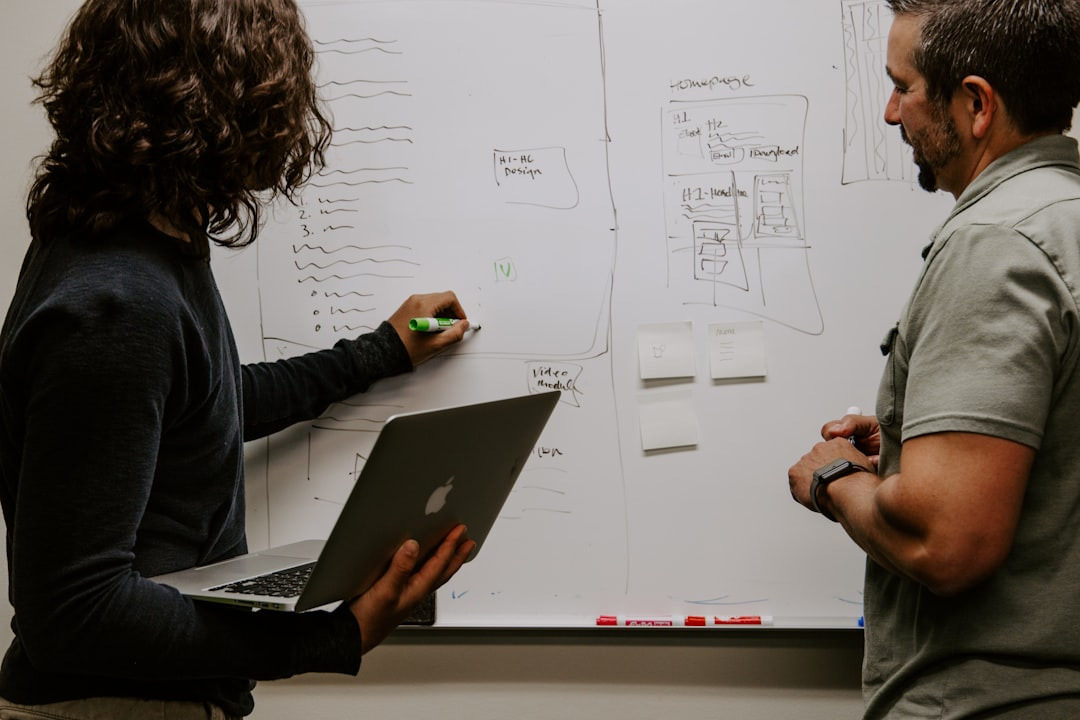
Working closely with Engineering, DevOps and other teams, providing guidance and training on best practices and new technologies. A discipline that…
-

Innovation and Improvement
Staying updated with the latest industry trends, technologies and best practices, and continuously seeking ways to improve architectural processes, solutions and…
-

Documentation and Governance
Creating and maintaining detailed documentation of architectural designs, standards, and best practices. Documentation and Governance covers the policies, processes, artefacts, and…
-

Monitoring and Troubleshooting
Implementing monitoring solutions to detect system bottlenecks and production issues, and troubleshooting any problems that arise. Monitoring and Troubleshooting is the…
-

Performance Optimization
Identifying and implementing strategies to improve system performance, scalability, and reliability, such as and clustering, proper resource allocation. Performance Optimization is…
-

System Integration
Ensuring seamless integration of new systems with existing infrastructure, addressing any compatibility issues. System Integration is the practice of connecting new…