


Automation of manual tasks and managing the configuration of servers to provide stable environments for development, testing, and production.
Automation and Configuration Management is the discipline of using repeatable, programmatic processes and versioned configuration to build, provision, operate, and maintain infrastructure and application environments so they are predictable, reproducible, and auditable.

Key objectives and benefits
– Consistency and repeatability — ensure identical environments across development, test, staging, and production.
– Speed of delivery — reduce manual steps to accelerate provisioning, deployments, and recovery.
– Reliability and stability — eliminate human error, reduce configuration drift, and improve uptime.
– Auditability and compliance — provide versioned records and change histories for governance and audits.
– Scalability and resilience — enable automated scaling, self‑healing, and standardized recovery.
– Cost control — reduce waste through automated lifecycle management and better resource hygiene.
Core components
Infrastructure as Code (IaC):
– Declarative blueprints that define servers, networks, cloud resources, and services as versioned code.
– Common patterns: template-driven provisioning, modules for reuse, and environment overlays for dev/test/prod.
Configuration management:
– Tools and manifests that enforce the desired state of OS, middleware, application runtime, and agent configuration.
– Concepts: desired state configuration, idempotency, configuration drift detection and remediation.
Deployment automation / CI-CD:
– Pipelines for build, test, artifact promotion, and orchestrated deployments across environments.
– Practices: immutable artifacts, blue/green or canary releases, automated rollbacks.
Orchestration and runbook automation:
– Coordinated multi-step processes across systems for complex workflows, runbooks, scheduled jobs, and incident responses.
Secrets and configuration stores:
– Secure, auditable storage for credentials, certificates, feature flags, and environment-specific settings.
Monitoring, drift detection, and remediation:
– Observability hooks that validate configuration, detect divergence, and trigger automated repair or alerts.
Typical processes and lifecycle
1. Authoring — write IaC templates and configuration manifests in code repositories using modules and parameterization.
2. Review and testing — static analysis, unit tests for modules, integration tests in ephemeral environments, policy checks.
3. Provisioning — automated creation of infrastructure via IaC in a controlled pipeline.
4. Configuration enforcement — apply and enforce desired state on provisioned instances; continuous convergence agents run regularly.
5. Deployment — promote artifacts through environments using automated pipelines and controlled rollout strategies.
6. Monitoring and validation — continuous checks for compliance, performance, and security; automated remediation where possible.
7. Change management and auditing — all changes go through version control, CI, and a traceable approval path; CMDB/Service maps updated automatically.
8. Decommissioning — automated teardown of resources, revocation of secrets, and archival of artifacts and logs.
Patterns and practices
– Immutable infrastructure — replace rather than mutate servers to avoid drift and simplify rollbacks.
– Idempotent configuration — make operations safe to apply repeatedly without side effects.
– Declarative over imperative — prefer describing desired end state to scripting procedural steps.
– Environment parity — keep dev/test/prod behaviorally consistent using the same IaC and config pipelines.
– Policy as code — encode security, compliance, and cost guardrails into the pipeline (e.g., linting, policy checks).
– Modularization and composition — break configurations into reusable, versioned modules or roles.
– Secrets lifecycle management — automated rotation, least-privilege access, and ephemeral credentials for workloads.
– Progressive rollout — canary, feature flagging, and gradual scaling to reduce blast radius.
Tooling categories (examples; pick tools to match environment)
– IaC — declarative languages and frameworks for provisioning.
– Configuration management — agents and declarative config tools for state enforcement.
– CI/CD — pipeline orchestration, artifact registries, and release automation.
– Secrets management — vaults, KMS, secrets operators for orchestrators.
– Orchestration — workflow engines and runbook automation for multi-step tasks.
– Drift detection and compliance — scanners and policy enforcement tools.
– Observability — metrics, logs, traces, and synthetic checks tied to config validation.
Roles, responsibilities, and governance
– Platform / SRE / Ops — own platform IaC modules, provisioning pipelines, runbooks, and production enforcement.
– Dev teams — own application-specific configs, CI pipelines, and tests that run in the provisioning flow.
– Security / Compliance — define policy as code, approval gates, secrets lifecycle rules, and audit requirements.
– Configuration manager or platform engineer — maintain module catalog, enforce standards, run drift remediation, and manage the CMDB integrations.
– Change/Release board — governs riskier changes and exceptions; automation reduces human approvals to predefined guardrails.
Metrics and KPIs
– Provisioning time — time to create a new environment from code.
– Time to recovery — automated recovery time when remediation runs.
– Configuration drift rate — percentage of systems deviating from declared state.
– Deployment frequency and lead time — pipeline throughput and cycle time.
– Change failure rate — percentage of automated changes causing incidents.
– Mean time to remediate drift — how quickly automated or manual correction occurs.
– Policy violation count — failed policy-as-code checks per pipeline run.
– Infrastructure cost per environment — used for optimization and automated teardown.
Common risks and mitigations
– Drift and undocumented manual changes — mitigate with strict enforcement agents, immutable patterns, and automated audits.
– Overly permissive automation — implement policy gates, least privilege, and reviewable change plans (preview/diff).
– Secrets exposure — enforce secret zero trust, use vaulting, encrypt at rest/in transit, and rotate frequently.
– Pipeline as single point of failure — design redundant pipeline runners, fallback flows, and emergency manual runbooks.
– Module sprawl and version chaos — enforce module ownership, semantic versioning, and clear deprecation policies.
– Performance or scale surprises from automation — include load testing in pipelines and use progressive rollout patterns.
Practical starter checklist
– Store IaC and configuration in version control with PRs and automated checks.
– Provide a library of vetted, versioned modules for common infrastructure patterns.
– Require preview/diff and policy-as-code validation before apply.
– Implement idempotent config agents or use immutable images to avoid drift.
– Centralize secrets in an auditable vault and integrate with runtime via short-lived credentials.
– Integrate observability and drift detectors into pipelines with automated remediation hooks.
– Define SLIs/SLOs for environment availability and recovery and measure them.
– Automate environment teardown for ephemeral test environments and enforce cost alerts.
-
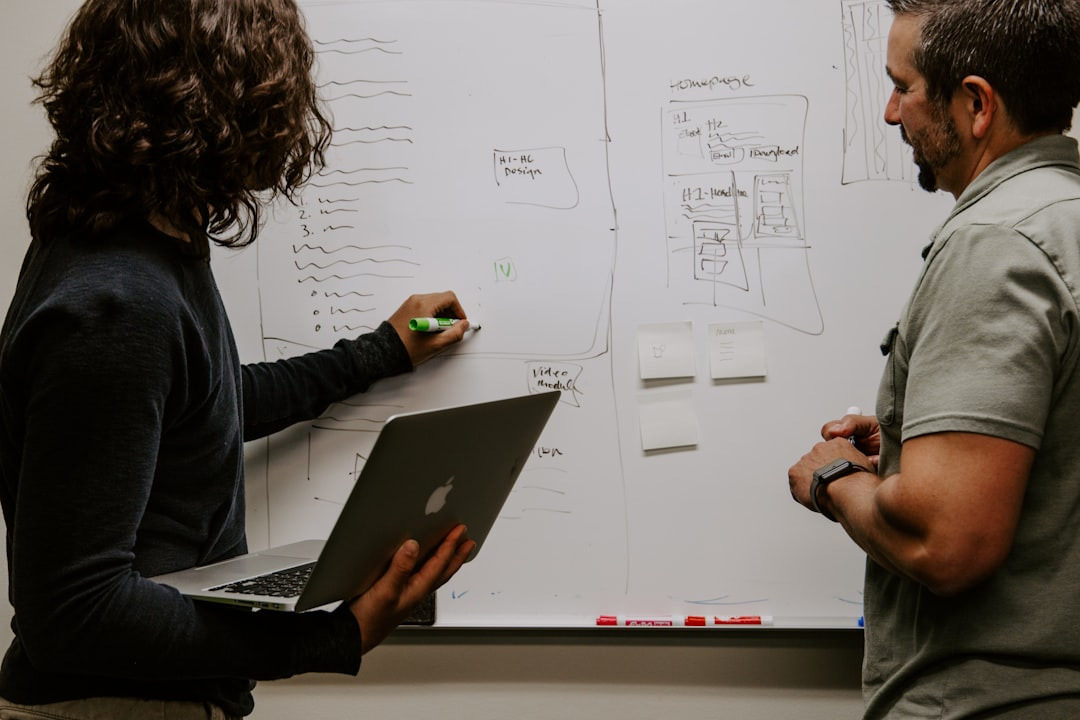
Collaboration and Support
Working closely with Engineering, DevOps and other teams, providing guidance and training on best practices and new technologies. A discipline that…
-

Innovation and Improvement
Staying updated with the latest industry trends, technologies and best practices, and continuously seeking ways to improve architectural processes, solutions and…
-

Documentation and Governance
Creating and maintaining detailed documentation of architectural designs, standards, and best practices. Documentation and Governance covers the policies, processes, artefacts, and…
-

Monitoring and Troubleshooting
Implementing monitoring solutions to detect system bottlenecks and production issues, and troubleshooting any problems that arise. Monitoring and Troubleshooting is the…
-

Performance Optimization
Identifying and implementing strategies to improve system performance, scalability, and reliability, such as and clustering, proper resource allocation. Performance Optimization is…
-

System Integration
Ensuring seamless integration of new systems with existing infrastructure, addressing any compatibility issues. System Integration is the practice of connecting new…